Explosive perfectionism in neurodivergent girls: Holding in the blast
For neurodivergent girls, the internal pressure feels like a rapidly-shaken can of cherry soda.
This is a See Her post — an invitation to see your daughter's experience from the inside before we interpret or act. Understand Her and Restore Her Nerve follow.
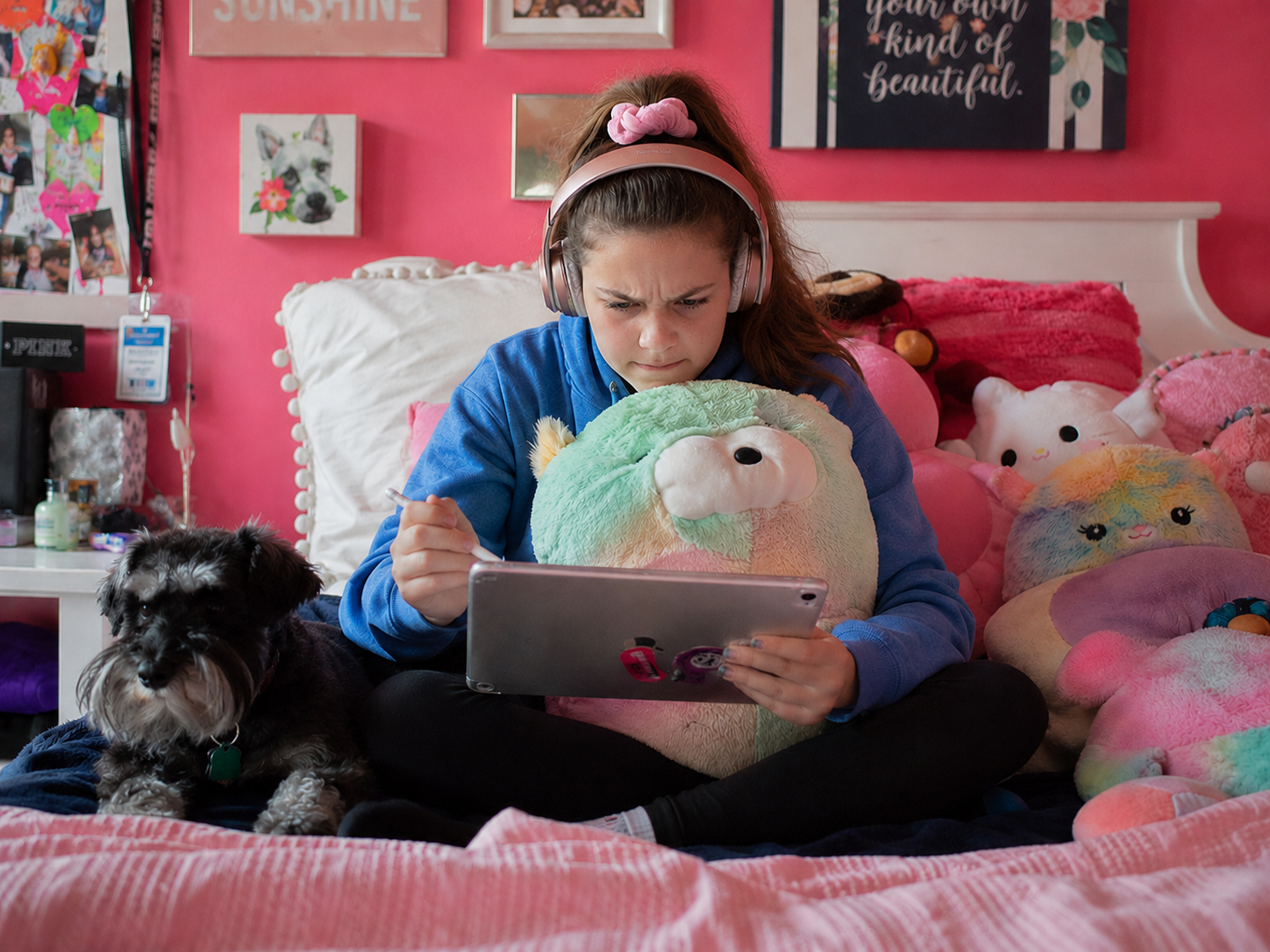
She is oozing frustration. Explosive energy swelling behind her green eyes. She is a rapidly shaken can of cherry soda lying in wait to ambush whomever unwittingly pops the tab open.
She is not sure if this eruption will be tears or rage or both. But she has been containing the mounting pressure in her young body all day, and she knows she is about to blow.
So she is cuddling in her blanket, sheltered by her squad of pastel colored stuffies, and working on her animation. She retreats on the screen into a world of characters she has drawn, given back stories to, and then animates.
It feels safe in that world. She controls the ecosystem, the rules, the social dynamics. Because in her real world, she feels like she has control over zilch.
But this time, she can’t figure out how to add the voiceover for a character at just the second she wants.
She tries something else. Groans. Reworks and tries again. Nothing. She flings her pink scrunchy across the room in annoyance, startling the dog. Her heart beat is picking up.
She feels betrayed. By the app. By herself. By the whole blazing world. They betray her because she is so stupid.
Everyone thinks it about her. And she expects everyone she meets will turn against her, too.
There is banner scrolling across her mind. Flashing neon lights. Stupid. Forgetful. Idiot. While she tries to do anything. It’s repetition and scale make it hard to see around it, to see her own thoughts. To achieve anything.
The words are blinding. Their judgment is devastating. And she holds her breath most days. Bracing for more evidence in the trial she is holding about herself.
So at this moment, she just needs to get the animation right. Evidence in her favor. That she is not a failure who is taking up oxygen on the planet.
She hugs her My Melody plushie in front of her. It is both comfort and protection. From what might happen next.
Then she calls her mom to come in to share the animation with her. If no one sees her success — that she finally figured out the voice over — did it really happen?
The world sees all her failures. She needs at least one person to witness that on this little screen, in this minute on Tuesday in March, those character assassinating words are not true. And she can turn them off.
Her mom comes in carrying laundry and sits down on the bed to watch. Her face lights up. She celebrates how cool the animation is. How proud she is that she keeps trying to learn even though it is so tricky. And she thinks she can put the My Melody to the side for a minute to show her more.
And then her mom gently offers one small way she knows from her own work as a designer to make it stronger.
She crushes the war-torn My Melody plushie into her chest so hard it looks like the head will pop off. Neon lights begin blinking at a frenzied painful pace across her brain. But now there is sound blaring with them. Stupid. Idiot. Failure.
The tab was pulled.
The cherry soda can burst into a geyser. Rage and tears blasting at her mom standing there stunned. Confused.
A note on perfectionism and neurodivergence: Shame-driven perfectionism exists across populations. What makes it particularly relentless in neurodivergent girls is that the source of the corrections is their neurology itself — not specific behaviors they can reliably change. The horizon is always receding because the standard being failed is who they are, not what they do.
Insight and Inspiration
Sign up to receive research-based support for parents of neurodivergent girls delivered to your inbox.
